
An HL7 Adapter That Turns Raw Cobas Infinity Output Into Branded Lab Reports
3 HL7 Versions
Read as shipped: 2.3, 2.5 and 2.7, including the output of legacy analyzers.2 Report Audiences
Off one converted stream: a physician report carrying technical detail, and a plain summary written for the patient.3 Desktop Platforms
Packaged as installables for Windows, macOS and Linux, running on the laboratory's own machine.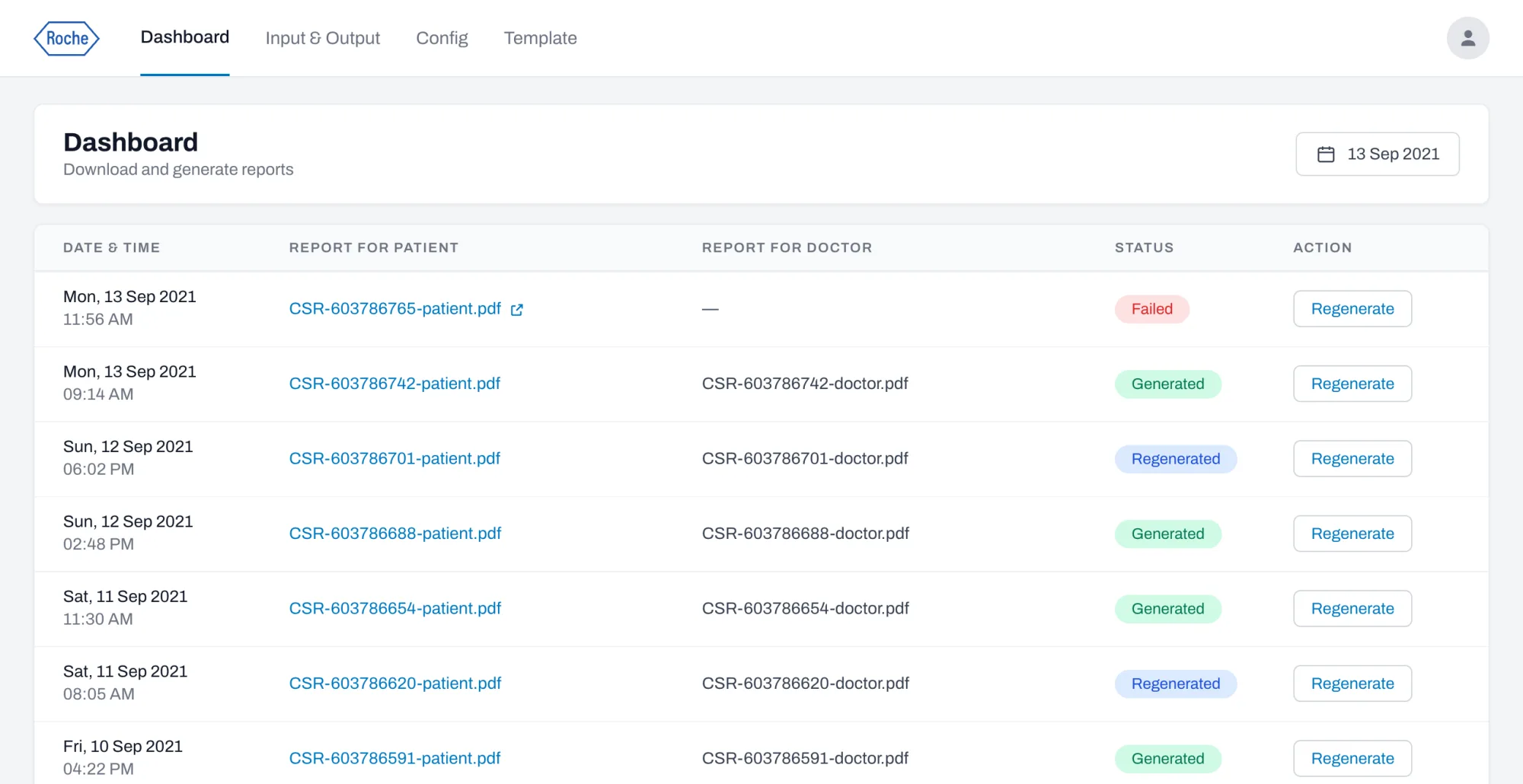
About Roche Cobas Infinity
- Geography
- Singapore
- Industry
- Healthcare
- Timeline
- 3 Months
- Services
- HealthTech Software Development
Cobas Infinity is one of Roche Diagnostics' premier laboratory platforms, and its analyzers report results as HL7 messages. HL7 is a format built for instruments to exchange, not one a laboratory can hand to a physician or to a patient.
Roche wanted reporting software it could offer to those laboratories, so a smaller lab would not have to license a heavyweight reporting suite to issue reports carrying its own branding. SoluteLabs built an offline-first installable that read the HL7 output from a Cobas Infinity analyzer and produced customizable lab reports from it, on the laboratory's own machine.
“SoluteLabs’ expertise in technology and services is exceptional—they consistently delivered on time, paid attention to detail, and often exceeded our expectations. Their active approach made a difference, allowing us to be true partners rather than just mentors.”
Srinath Jagannathan
Global Head, Commercial BI, Roche
Solution
We built an adapter that sat between the analyzer and the report. It read HL7 2.3, 2.5 and 2.7, including the output of legacy analyzers, recognized and validated the non-standard fields laboratories had accumulated over the years, and flagged anomalies for manual review with an error log behind them.
Everything downstream of that conversion was templates. A laboratory set its own branding, headers and patient fields, previewed a template change as it made it, and used conditional logic so a report showed only what a given result called for. One converted stream produced two documents: a physician report carrying comparative technical detail, and a patient report written as a plain summary, both with color coded reference ranges.
HL7 Adapter
Dual Physician and Patient Reports
Offline-First Desktop Installable
Deliverables
HL7 in, branded PDF out
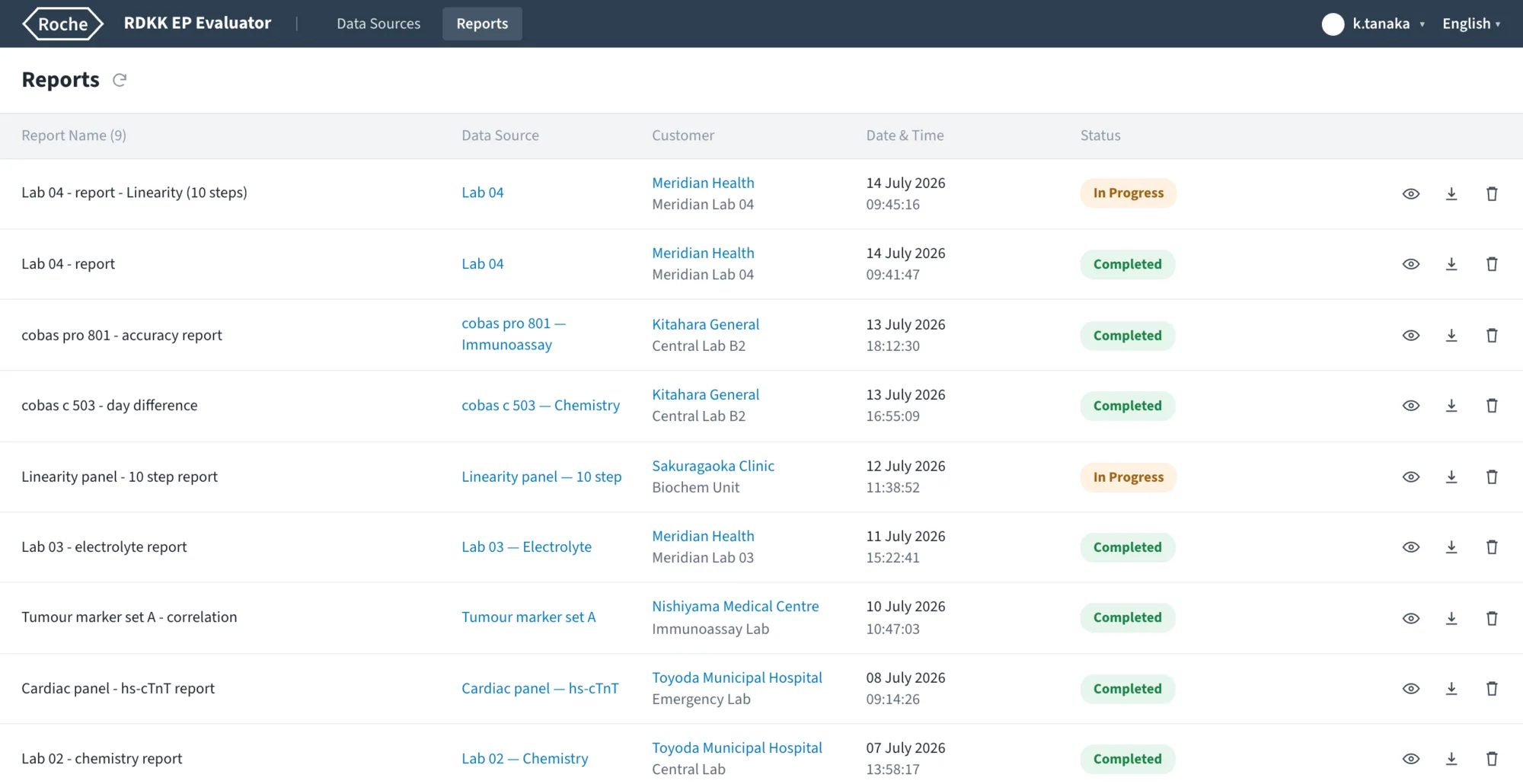
The adapter is the whole mechanic. Raw analyzer output on one side, a formatted report on the other, and the mapping between them visible while it runs.
01
Configure what a report contains
A laboratory set its own branding, headers and patient fields, and previewed a template change as it made it, before any report was generated from it.
02
One conversion, two readers
One converted stream produced two documents: a physician report carrying comparative technical detail, and a patient report restating the same result as a plain summary. Both used color coded reference ranges.
Outcomes
The build went to production. What it left behind was an adapter that read what the analyzer actually sent, two readerships served from one conversion, and an installable that ran on the hardware the lab already had.
An adapter that read what the analyzer sent
Handled HL7 2.3, 2.5 and 2.7, including the output of legacy analyzers still on the bench.
Recognized and validated non-standard message fields instead of rejecting the message.
Flagged anomalies for manual review and kept an error log behind each one.
Two readerships from one conversion
Physician reports carried comparative technical detail.
Patient reports restated the same result as a plain summary.
Both used color coded reference ranges, generated from the same converted stream.
Shipped as an offline-first installable
pkg produced cross-platform executables for Windows, macOS and Linux.
Ran on older laboratory machines and through low-connectivity conditions.
Containerized with Docker for deployment where a lab wanted it.
Sitting on an instrument whose output nobody downstream can read?
That’s the brief you just read: raw HL7 off the analyzer, turned into reports both the physician and the patient could act on. Let’s talk about yours.


